1. What makes a Stage Manager essential to a theatrical production?
2. What routine do you generally follow when calling the show?
3. What does 'blocking' mean to you?
4. What do you feel is a Stage Managers most important task? Why?
5. What are some of the specific jobs during a show that make a Stage Manager completely necessary?
6. What regular theatre position, if any, could replace a Stage Manager? How would this work?
7. During the rehearsal period, what do you spend a majority of your time doing?
8. What kinds of things do you find yourself doing things for the show when you aren't at rehearsal or at a show?
9. How much time do you spend working on a show? (Including periods outside of rehearsals and show dates)
10. Why is a centralized figure needed to complete specific tasks?
11. What are some of the special skills a Stage Manager needs to have?
12. Why couldn't the actors pull off keeping their own blocking and running the show on their own?
13. How does the Stage Manager contribute to the success of a show?
14. When is it okay for a stage manager to not be there?
15. What is the Stage Managers goal when working on a show?
16. In what way should a Stage Manager interact with the cast and crew?
17. Why does the Stage Manager involve themselves with so many people?
18. Where is the Stage Manager stationed when running a show? Why?
19. What is the Stage Managers role as the head of the Stage Crew?
20. What are the consequences of removing the Stage Manager from a play?
Thursday, February 21, 2013

Wednesday, February 6, 2013
2-Hour Meeting Answer #2
1) What makes a Stage Manager essential to a theatrical production?
2) A Stage Manager is essential because they are the people who call the shows.
3)
a. Calling the show and the cues is the way the Stage Manager keeps the show running smoothly, by communicating with the tech crew, stage crew, house, and actors.
b. During the show, this is the Stage Managers main job, as it requires a lot of focus and attention to detail.
c. When the Stage Manager is running the show, the entire production is in their hands, and that is a lot of power that can only be taken on by people who can work with and lead others.
4) Source 27, an article titled Stage Management by Alandra Hileman, showed me that running the show is one of the most complex and rewarding tasks that a Stage Manager must perform.
5) I plan to continue my study of my seconds answer by looking up for research, and through real life experience in my independent component.
Monday, February 4, 2013
Delval
Rehearsals
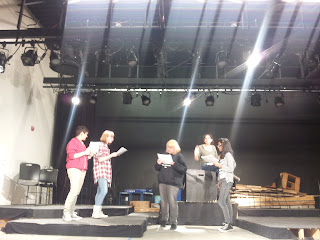
for the spring show I will be directing have recently started, and I must say I
am very excited. In addition to my play, Delal
Divas, drama will be putting on two other shows, Nunsense and New Kids at Vampire
High, a feat no sane theatre department would attempt. While this will
require new lighting and set challenges when switching between shows, which
will rotate so each show is performed three times, I am looking forward to
solving the problems and putting on quality shows!

Sunday, February 3, 2013
Independent Component 2 Plan Approval
1) For the second independent component, I will be stage managing or working on several projects for the iPoly drama club. I will be stage managing for the production of Del Val Divas, and a couple of smaller scenes for Fullerton Festival.
2) 30 hours will be easily completed, because the various scenes and show will require 4 days of rehearsal per week, for several weeks until May.
3) My EQ aims to understand why a stage manager is necessary to a production, and gaining experience in the field under a professional teacher is easily the best way to learn what is important.
Thursday, January 31, 2013
Literal



a) I, Gabriel Barreras, affirm that I completed my independent component which represents 30 hours of work.
b) Joseph Hogan
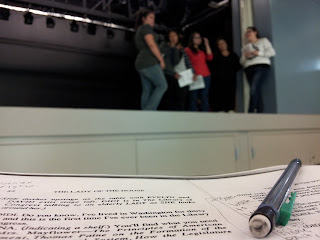
d) I stage managed for iPoly Drama Club's production of Lady of the House, and also did the light design, and worked to build the stage.
Interpretive


I showed up to every rehearsal, normally 3 days a week, and did managerial duties, such as maintaining the bible, taking notes, gathering props, and running shows and rehearsals. I was also very involved with the design of the lighting, which took several un-logged hours, and helped to build the new stage required for the play, staying until 10 pm on a couple of nights.
Applied
Being that my topic is Stage Managing, the best way to learn is through experience, and going through the pressures of an actual show. If I ever slipped up, having a teacher who was trained specifically for theatre was very beneficial for the fact that he would guide me towards getting it right. Running an actual show gave me experience in all of the jobs, which helped me come up with my first answer to my EQ.
Friday, January 18, 2013
Monday, January 14, 2013
Third Interview Questions
1. What makes a Stage Manager essential to a theatrical production?
2. As a stage manager, what job do you find yourself most commonly doing?
3. Are there any tasks that you feel would be better completed by someone other than a SM?
4. What kind of compensation, if any, do you recurve for Stage Managing?
5. Have you ever worked on a show that did not have a SM attached to it? What was it like?
6. Do you feel a SM kind of pulls the show together?
7. What tasks do you find have the most priority when preparing for a show?
8. Where would you place a SM in the chain of command of a production staff?
9. Do you believe that any of a Stage Managers tasks could be accomplished by other crew, thus eliminating the SM?
10. Why does having a SM help or hinder a show?
Subscribe to:
Posts (Atom)